There’s a song that always pops into my head when I’m in Japan: Radiohead’s Everything in Its Right Place.
I love Japan. The food, the people, the culture—and the attention given to things that, elsewhere, might be overlooked. There’s a particular satisfaction in seeing something done properly, whether it’s a beautifully prepared meal or a process that runs exactly as it should. Its the only culture I can think of where people pick a field to enter at a young age, and just do that field for their lifespan. There's a dedication to a singular focus that I feel like other cultures are lacking, and its one of the reasons why Japanese-made products and experiences are so respected.
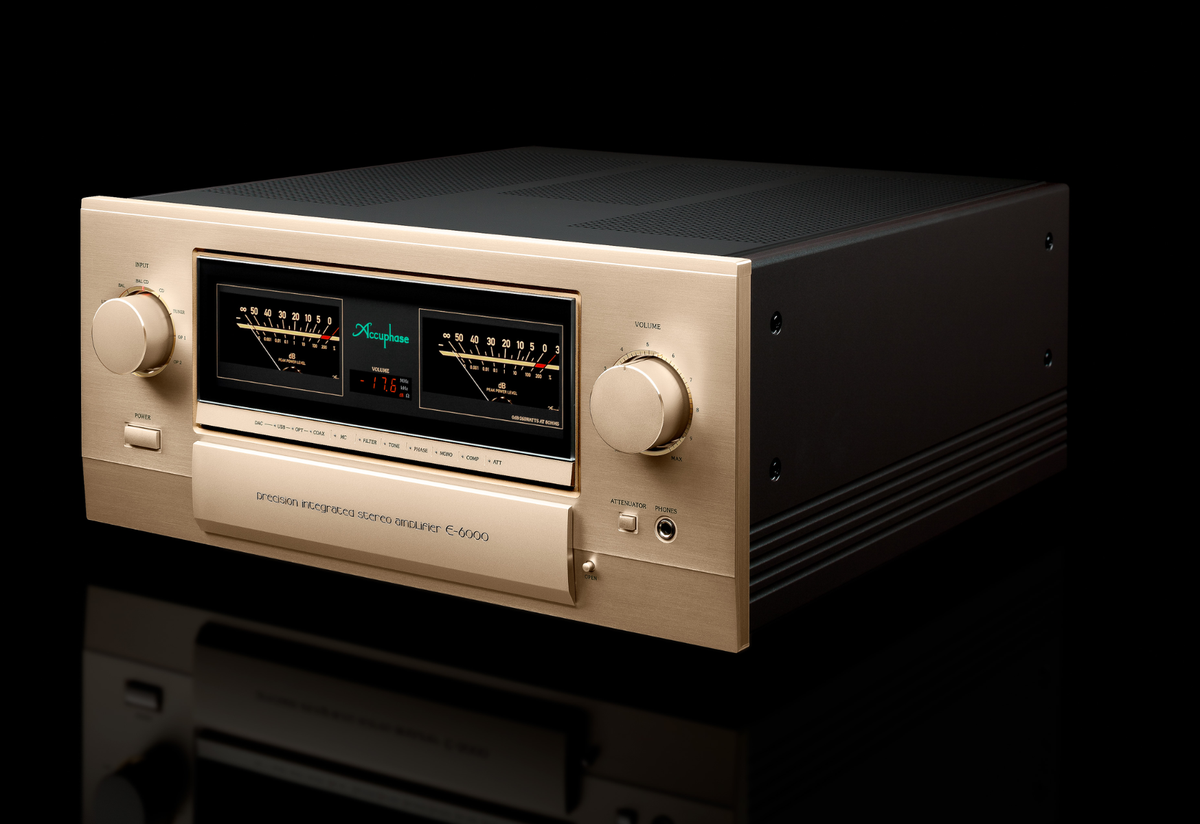
Last week, that song came to mind again when I visited the Accuphase factory in Japan. I was there to meet the people behind a brand I’ve long admired and hear its new E-6000 integrated amplifier.
It was a visit I’d been looking forward to.
Getting to Accuphase from Tokyo
My journey to Accuphase took around 45 minutes by train from Tokyo Station to Tama-plaza Station, followed by a ten-minute walk.
When you work with hi-fi equipment every day, visiting a manufacturer brings a different perspective. You know the products from the showroom. You’ve demonstrated them, discussed them with customers and spent time understanding where they fit into a system.
Then you arrive at the place they come from. The name on the front panel becomes a little more personal.
Nishigawa-san, from Accuphase’s International Marketing Division, was kind enough to greet me and spend time with me. He also gave me the opportunity to listen to the new Accuphase E-6000. I was also blessed by a surprise visit from the ever-affable Jim Saito-san, one of the Accuphase founders - always a treat to have a moment of his time.
That was a very welcome part of the visit.
Hearing the New Accuphase E-6000 Integrated Amplifier
The new E-6000 is Accuphase’s most powerful integrated amplifier to date, delivering 260 watts per channel into 8 ohms and 350 watts per channel into 4 ohms. It uses Class AB amplification and a fully balanced configuration from input to output. It replaces the outgoing E-5000, an impressive amplifier in its own right. Nishigawa-san had set up the system allowing a A/B comparison between the E-5000 and E-6000, and, unsurprisingly so, the E-6000 was a clear step up. The first thing I noticed was the sheer impact - even on a cruisy, poppy song like Matt Johnson's Fascination, the first few bars were immediately more engaging on the E-6000 than the E-5000.
The E-6000 also features Accuphase’s Balanced AAVA volume control with ANCC—part of the engineering behind this new integrated amplifier.
Those specifications provide useful context, but this wasn’t a formal review session. While the improvements the E-6000 brings over the E-5000 were easy to discern, I was there as a guest, listening to the amplifier with the people behind it rather than working through a familiar test system back in Sydney.
For me, that distinction matters. A proper assessment takes time, familiar music and an understanding of the complete system. This was something different: an opportunity to hear a significant new Accuphase amplifier at Accuphase itself.
However long you’ve been in this industry, that’s still a special experience.
Why Accuphase Commands So Much Respect
One thing I’ve noticed over the years is how often Accuphase comes up in conversations with other hi-fi manufacturers.
Ask someone, “Which brand, other than your own, do you respect the most?” and, in my experience, the answer is very often Accuphase.
That’s not a formal survey. It’s an observation from years of conversations. But it has happened often enough to stay with me.
I find that particularly telling in an industry full of strong opinions. There are many different approaches to designing an amplifier, and the people behind those designs understandably believe in their own work. When they speak with admiration about another manufacturer, I pay attention.
Accuphase is highly sought after by customers, but that respect from within the industry adds another dimension to its appeal.
People who understand how difficult it is to build exceptional audio equipment recognise something in what Accuphase does.
Japanese Culture and the Accuphase Approach
Part of what draws me to Accuphase is the connection I see between its products and the things I appreciate about Japanese culture.
Procedure. Precision. The pursuit of perfection.
I don’t mean that every aspect of Japan can be neatly summed up in those three ideas. But they describe something I notice and enjoy whenever I visit: the willingness to give a task the attention it deserves.
For me, the word that ties it together is care.
Care about how something is designed. Care about how it is made. Care about details that the person using it may never consciously notice.
(Quick side note - if you haven't read our introductory article on Accuphase, I encourage you to do so - its a great insight into the company and why Accuphase is so respected. You can also check out some photos and videos of when we visited the Accuphase factory in 2025, or when Saito-san visited our showroom in Sydney.)
That’s how I think about Accuphase. The engineering matters, of course, but so does the sense of purpose behind it. There’s a reason people are drawn to the brand beyond any individual specification.
Visiting the factory again gave me a more personal connection to that feeling. It’s one thing to discuss Japanese hi-fi engineering in our Sydney showroom. It’s another to travel to Japan, meet the people behind the equipment and sit down to listen with them.
My thanks to Nishigawa-san for the welcome and the opportunity to hear the E-6000. I arrived with a great deal of respect for Accuphase, and I appreciated the chance to spend time at the place behind the name.
Back at Audio Connection, those experiences become part of how we talk about the equipment—not just what it does, but why we’re interested in it in the first place.
And somewhere along the way, Radiohead found its way into my head again.
Everything In Its Right Place.